
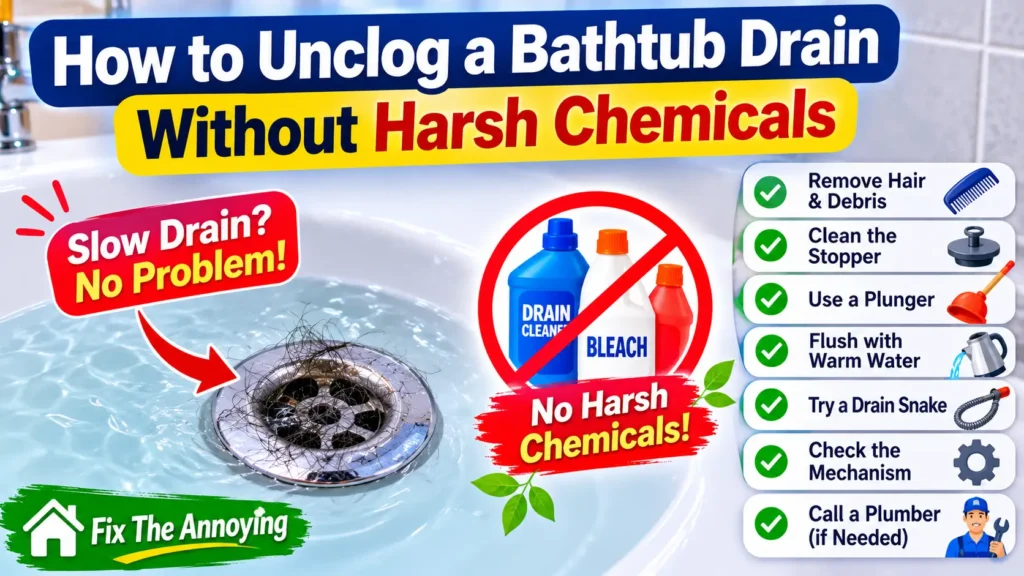
How to unclog a bathtub drain without harsh chemicals is a common question when water drains slowly or collects around your feet. Hair, soap residue, and debris can build up around the drain stopper and inside the pipe. Fortunately, you can often clear a minor blockage using simple tools such as a plastic drain-cleaning hook, a suitable plunger, or a manual drain snake.
The good news is that you can often unclog a bathtub drain without harsh chemical cleaners. Simple tools such as a drain-cleaning hook, a suitable plunger, and a manual drain snake can help remove common blockages while reducing the risk of damaging your plumbing.
In this guide, you’ll learn seven practical ways to unclog a bathtub drain without harsh chemicals, how to identify the likely cause, and when it’s best to call a plumber.
What Causes a Bathtub Drain to Clog?
Before choosing a solution, it helps to understand what may be blocking the drain.
Common causes include:
- Hair buildup: Hair collects around the stopper and combines with soap residue to form a blockage.
- Soap scum: Soap residue gradually accumulates on the drain components and pipe walls.
- Dirt and debris: Small particles can collect around the stopper or mix with hair.
- A blocked drain stopper: Hair and residue may become tangled around the stopper mechanism.
- A deeper pipe blockage: A clog farther inside the plumbing may prevent water from draining normally.
- A stopper adjustment problem: Some bathtub stoppers can sit too low or become misaligned, restricting drainage.
If only the bathtub drains slowly, the blockage may be local to that fixture. If several drains are slow or water backs up into other fixtures, the problem could be deeper in the plumbing system.
How to Unclog a Bathtub Drain Without Harsh Chemicals: 7 Methodss
Fix 1: Remove Visible Hair and Debris
Start with the simplest solution. Hair and soap residue often collect around the drain opening or just below the stopper, where you may be able to remove them without taking apart the plumbing.
What you need:
- Rubber gloves
- A flashlight
- A plastic drain-cleaning hook or hair-removal tool
- Paper towels or an old cloth
Steps:
- Stop running water into the bathtub.
- Put on rubber gloves and inspect the drain opening with a flashlight.
- Remove the stopper if your bathtub design allows it to be removed safely.
- Use your fingers or a suitable plastic drain-cleaning tool to retrieve accessible hair and debris.
- Pull the material out slowly instead of pushing it deeper into the pipe.
- Dispose of the debris in the rubbish.
- Run a small amount of water to see whether drainage improves.
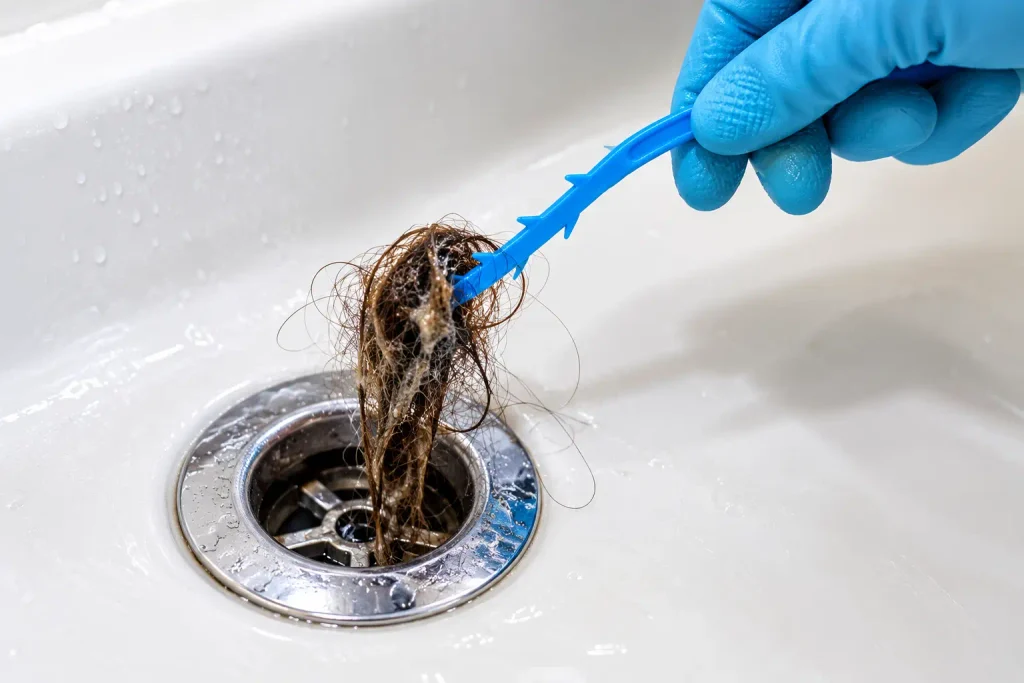
Why this helps: Removing hair near the drain opening can restore water flow when the blockage is close to the surface.
Important: Do not force a tool into the drain or use sharp objects that could scratch the bathtub finish or damage plumbing components.
Fix 2: Clean the Bathtub Drain Stopper
The drain stopper can collect hair, soap scum, and other debris. Even when the drainpipe itself is clear, buildup around the stopper may restrict water flow.
Steps:
- Identify whether your bathtub uses a lift-and-turn, push-and-pull, toe-touch, or trip-lever stopper.
- Follow the manufacturer’s instructions to remove or open the stopper for cleaning.
- Remove visible hair and residue from the accessible surfaces.
- Use a soft brush and a suitable household cleaner to remove remaining buildup.
- Rinse the removable component with clean water.
- Reinstall the stopper according to the manufacturer’s instructions.
- Test the drain to check whether water flows more freely.
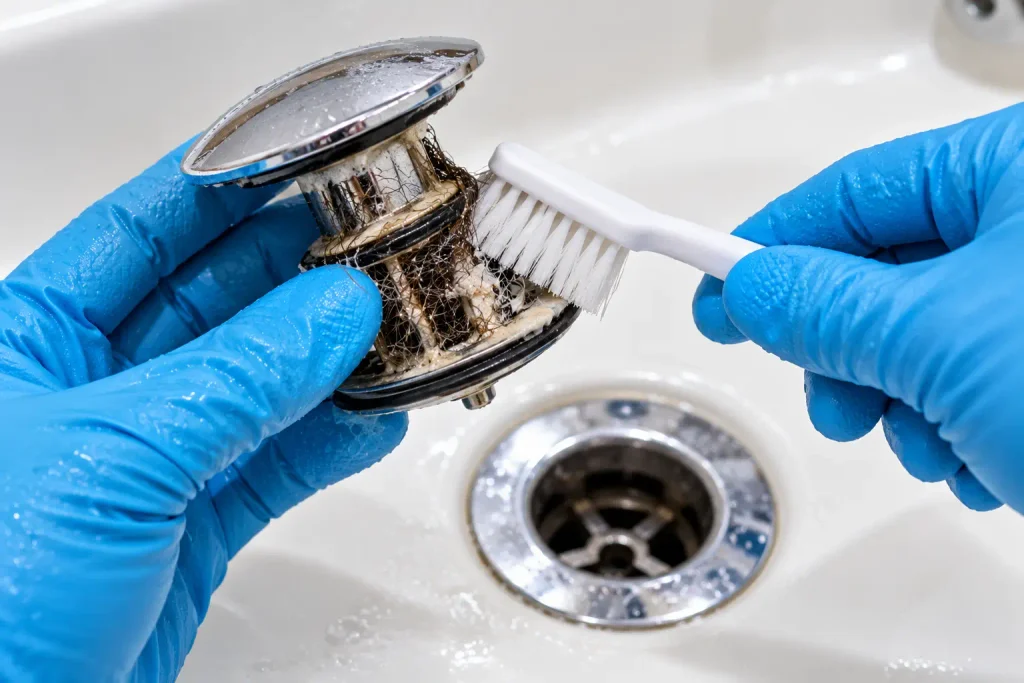
Why this helps: Cleaning the stopper removes material that can obstruct the drain opening or interfere with the stopper’s movement.
Important: Some trip-lever stoppers connect to a linkage behind the overflow plate. Avoid pulling out unfamiliar parts or forcing a stuck mechanism. If the assembly is difficult to remove, ask a plumber for help.
Fix 3: Use a Bathtub Plunger
A suitable plunger can help loosen a blockage that sits farther down the drain. For best results, the rubber cup needs to seal against the bathtub surface, and the overflow opening must be covered to prevent air from escaping.
What you need:
- A cup-style sink or bathtub plunger
- A wet cloth
- Gloves
Steps:
- Check that no chemical drain cleaner has been used in the bathtub.
- If the tub contains standing water, remove enough to work safely, leaving sufficient water to cover the plunger’s rubber cup.
- Cover the bathtub overflow opening firmly with a wet cloth.
- Position the plunger directly over the drain and create a secure seal.
- Push down gently at first, then use controlled up-and-down strokes for around 15–20 seconds.
- Lift the plunger and check whether the water begins draining.
- Repeat a few times if there is improvement, but stop if the blockage does not respond.
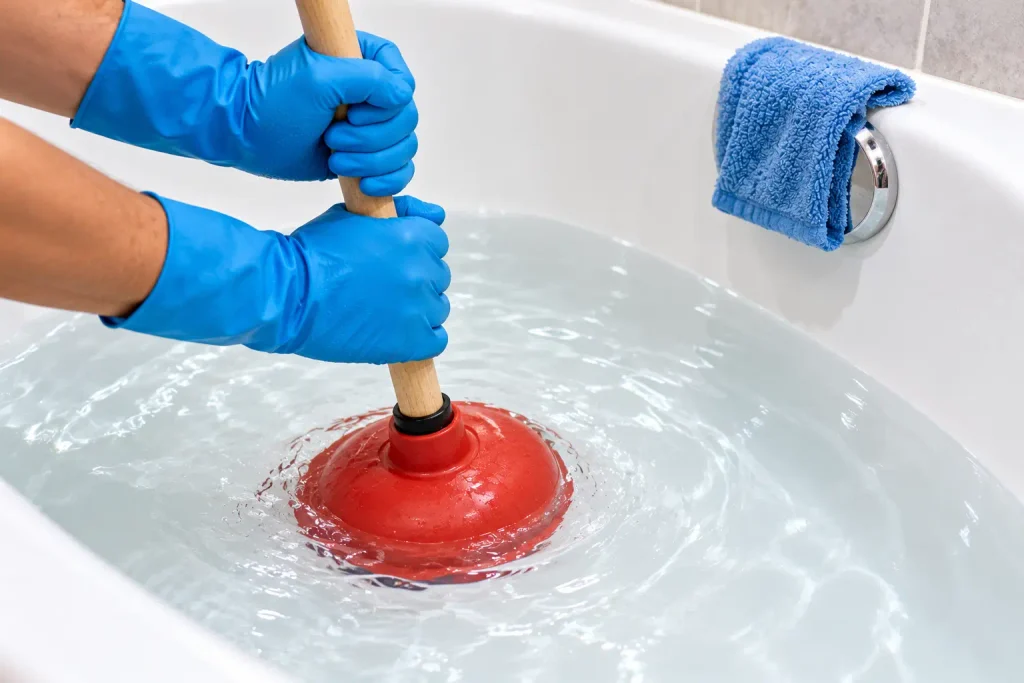
Why this helps: Plunging creates pressure changes that may loosen a nearby blockage and help move it through the drainpipe.
Important: Do not plunge if chemical cleaner may still be present in the standing water or pipe. Avoid excessive force, which may disturb drain seals or connections.
Fix 4: Flush the Drain With Warm Water
Warm water may help loosen light soap residue, but it will not reliably remove a solid hair clog. Use it only when the bathtub and plumbing materials are suitable for the water temperature.
Steps:
- Remove any visible hair and debris from the drain opening.
- Check the bathtub and drain manufacturer’s recommendations for suitable water temperatures.
- Slowly pour a moderate amount of warm water into the drain.
- Allow it to flow through the pipe without splashing.
- Observe whether the water drains more quickly.
- Stop if the water backs up or the drain remains completely blocked.
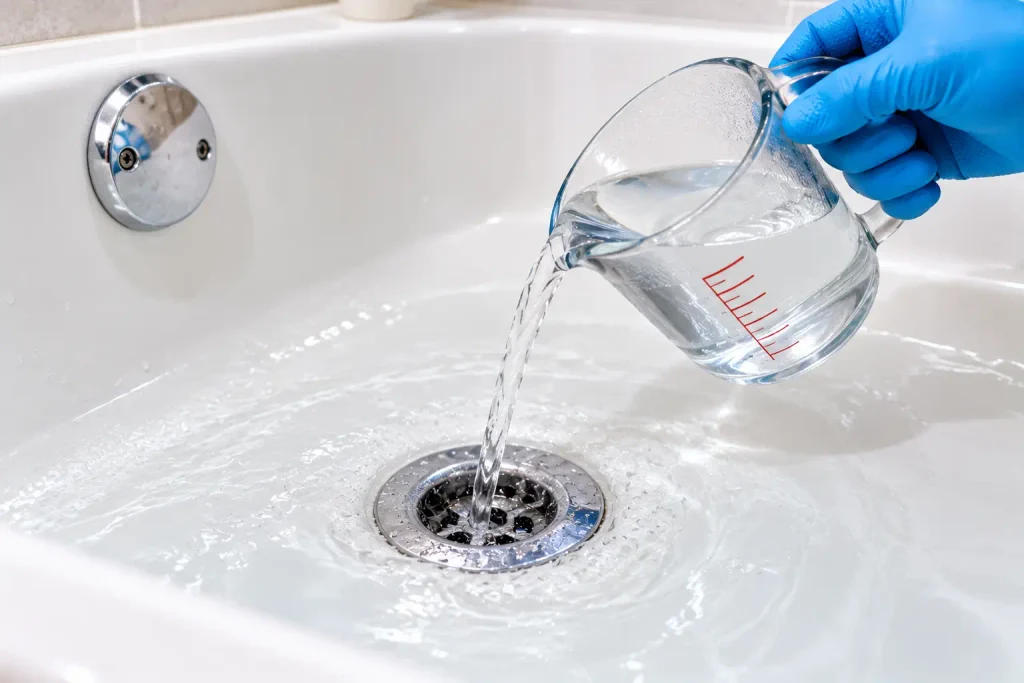
Why this helps: Warm water may soften some light residue and help carry loose material through the drain.
Important: Do not use boiling water as a universal drain-clearing solution. It can damage some plastic plumbing components, seals, or bathtub finishes. Warm water is not a substitute for removing a hair blockage.
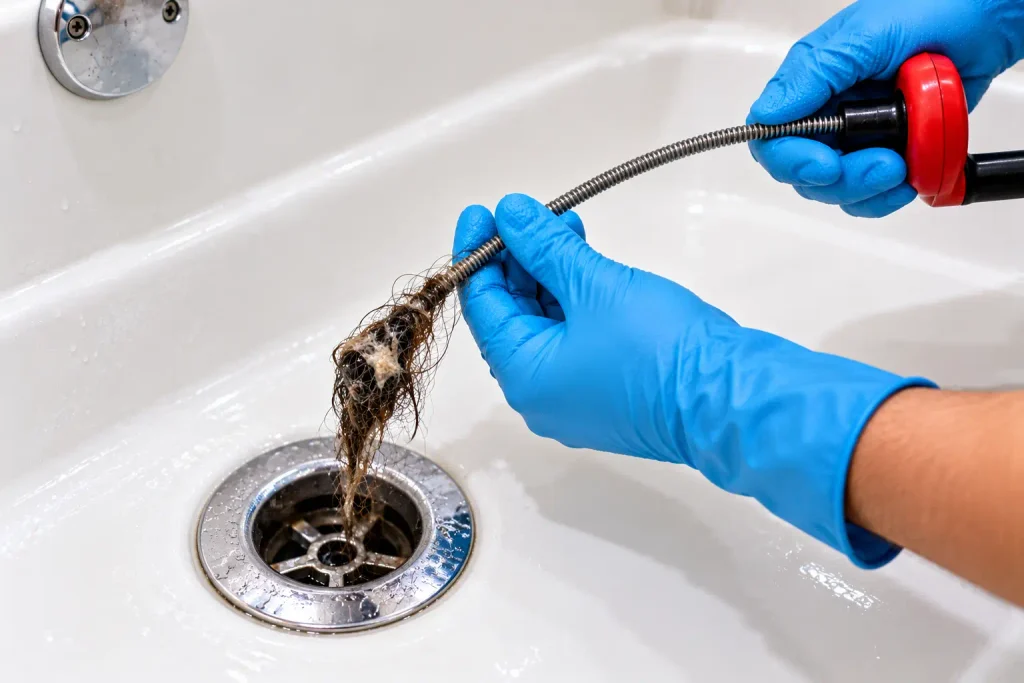
Fix 5: Use a Plastic Hair-Removal Tool or Manual Drain Snake
If the blockage is beyond the reach of your fingers or a small drain hook, a suitable manual tool may help retrieve it.
A thin plastic hair-removal tool is often a reasonable next step for accessible hair clogs. A manual drain snake can reach farther into the pipe when used correctly.
Steps:
- Confirm that no chemical drain cleaner has been used.
- Remove the stopper or strainer only if the design permits safe removal.
- Choose a tool designed for bathtub drains and follow its instructions.
- Insert the tool slowly through the accessible drain opening.
- If you feel resistance, avoid forcing the tool deeper.
- Rotate or move the tool as directed to catch the blockage.
- Withdraw it slowly and remove any trapped hair or debris.
- Clean the tool and test the drain with a small amount of water.
For more detailed instructions on clearing a bathtub drain, read this This Old House guide to unclogging a bathtub drain. It explains common causes of bathtub clogs and demonstrates practical methods for clearing blockages with suitable tools.
Why this helps: A drain-cleaning tool can physically retrieve hair and debris that cannot be reached from the drain opening.
Important: Do not use excessive force or an oversized auger. Some bathtub drains have delicate stopper linkages or configurations that can be damaged by incorrect tool placement. If the tool repeatedly catches or cannot pass safely, stop and contact a plumber.
Fix 6: Check the Overflow and Stopper Mechanism
Some bathtub drains use a trip-lever or other mechanical stopper connected to a linkage behind the overflow plate. If the mechanism becomes misaligned, it may restrict drainage even when there is no major clog.
This check is appropriate only if the mechanism is accessible and you can follow the manufacturer’s instructions.
Steps:
- Identify whether your bathtub has a visible trip lever or overflow control.
- Inspect the accessible parts for obvious damage, looseness, or buildup.
- Check the manufacturer’s instructions before removing any cover or component.
- Clean only the accessible surfaces and remove visible debris.
- Reassemble the parts carefully if you have removed a component that is intended for homeowner servicing.
- Test the stopper and drainage.
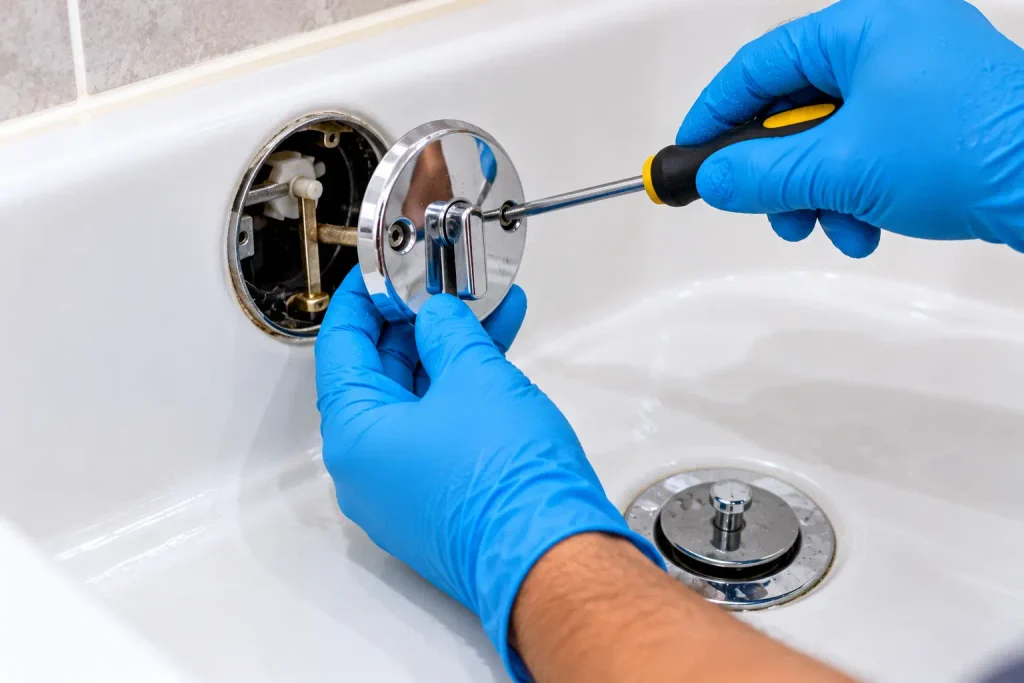
Why this helps: A misaligned or incorrectly positioned stopper can restrict drainage and mimic a pipe blockage.
Important: Do not pull out a linkage assembly or dismantle concealed plumbing unless you know how to reinstall it correctly. If the stopper does not operate normally, a plumber can inspect and adjust the mechanism.
Fix 7: Call a Plumber for a Persistent or Deeper Blockage
If the simpler methods do not restore drainage, the obstruction may be farther down the pipe or associated with a damaged drain component.
A plumber may need to inspect the drain, use a suitable auger, or check the plumbing system for a deeper blockage.
Contact a plumber if:
- The bathtub remains completely blocked after basic troubleshooting.
- The blockage returns repeatedly.
- Several drains in your home are slow.
- Water backs up into the bathtub when another fixture is used.
- You hear persistent gurgling from multiple drains.
- You notice leaks, damp patches, or water stains near plumbing.
- A stopper or drain mechanism is stuck or damaged.
Why this helps: Professional diagnosis can identify a deeper obstruction or plumbing fault without relying on repeated, potentially damaging DIY attempts.
Important: If wastewater or sewage backs up into the bathtub, stop using affected fixtures and seek professional assistance promptly.
Quick Troubleshooting Table
| Problem | Possible cause | Recommended action |
|---|---|---|
| Water drains slowly | Hair or soap residue | Remove visible debris and clean the stopper |
| Water pools around the drain | Hair clog near the opening | Use a suitable hair-removal tool |
| Water remains standing | More substantial blockage | Try a properly sealed plunger if no chemical cleaner has been used |
| Drain improves briefly but slows again | Deeper or recurring blockage | Use a suitable manual tool or contact a plumber |
| Stopper is difficult to operate | Buildup or misaligned mechanism | Check manufacturer instructions |
| Several drains are slow | Wider plumbing blockage | Contact a plumber |
| Water backs up into the tub from another fixture | Possible shared drain or sewer-line problem | Stop using affected fixtures and seek professional help |
Common Mistakes to Avoid
Don’t Mix Household Cleaning Products
Never mix drain cleaners, bleach, vinegar, or other cleaning products in an attempt to create a stronger solution. Mixing products can produce hazardous reactions or fumes.
If a chemical drain cleaner has already been used, follow the product label’s safety instructions. Do not plunge or insert a drain-cleaning tool into the treated drain while hazardous product residue may remain.
Don’t Rely on Baking Soda and Vinegar for Every Clog
Baking soda and vinegar are commonly suggested as a homemade drain remedy, but their fizzing reaction does not reliably remove compacted hair or a deeper physical blockage.
For a typical bathtub hair clog, removing the debris with a suitable tool or using a properly sealed plunger is generally a more direct approach.
Don’t Pour Boiling Water Into Every Drain
Boiling water may be unsuitable for some plastic pipes, seals, and bathtub materials. Use warm water only when the manufacturer’s guidance permits it.
Don’t Push Hair Deeper Into the Pipe
A tool that pushes debris farther down can make the blockage more difficult to remove. Choose a tool designed to catch and retrieve hair, and withdraw it carefully.
Don’t Force the Stopper or Drain Snake
A stuck stopper or resistant drain snake may indicate a mechanical obstruction or an unsuitable tool. Stop rather than risking damage to the drain assembly.
How to Prevent Bathtub Drain Clogs
Regular maintenance can reduce the amount of hair and residue entering the drain.
- Use a suitable drain hair catcher: Choose a catcher compatible with your bathtub drain.
- Remove hair after bathing: Clear accessible hair before it collects around the stopper.
- Clean the stopper regularly: Remove soap residue and debris according to the manufacturer’s instructions.
- Avoid rinsing unnecessary debris into the tub: Dispose of loose hair in the rubbish.
- Watch for early warning signs: Address slow drainage before the blockage becomes severe.
- Maintain the plumbing carefully: Do not force stuck components or use unsuitable tools.
Regular home maintenance can help you spot small plumbing problems before they become larger repairs. Follow our Monthly Home Maintenance Checklist for more practical home maintenance tips.
Frequently Asked Questions
How do I unclog a bathtub drain without harsh chemicals?
Start by removing accessible hair and debris, then clean the stopper. If the drain remains slow, use a suitable plunger or manual drain-cleaning tool, provided no chemical cleaner has been used. Contact a plumber if the blockage persists.
What causes most bathtub drain clogs?
Hair and soap residue are common causes. They can collect around the stopper and combine into a blockage that restricts water flow.
Does baking soda and vinegar unclog a bathtub drain?
It may help with some light residue, but it is not a reliable solution for a solid hair clog or a deeper obstruction. Mechanical removal is often more appropriate for these blockages.
Can I use boiling water to unclog a bathtub drain?
Boiling water is not recommended as a universal solution because it may damage some pipes, seals, or bathtub materials. Use warm water only if it is suitable for your plumbing.
Should I use a plunger if water is standing in the bathtub?
A plunger may help with a nearby blockage if the drain has not been treated with chemical cleaner. Ensure the overflow is covered and the plunger forms a good seal. If hazardous cleaner residue may be present, do not plunge.
When should I call a plumber for a clogged bathtub drain?
Call a plumber if the blockage does not clear with basic methods, returns frequently, affects several fixtures, causes water to back up, or is accompanied by leaks or sewage.
Final Thoughts
A clogged bathtub drain does not always require harsh chemical cleaners or an immediate plumbing repair. Removing accessible hair, cleaning the stopper, using a suitable plunger, and carefully retrieving debris with a drain-cleaning tool can resolve many common blockages.
Start with the least invasive method and test drainage after each step. Avoid mixing cleaning products, pouring boiling water into unsuitable plumbing, or forcing tools into the drain. If the blockage persists or affects several fixtures, contact a qualified plumber to protect your plumbing system and prevent further damage.