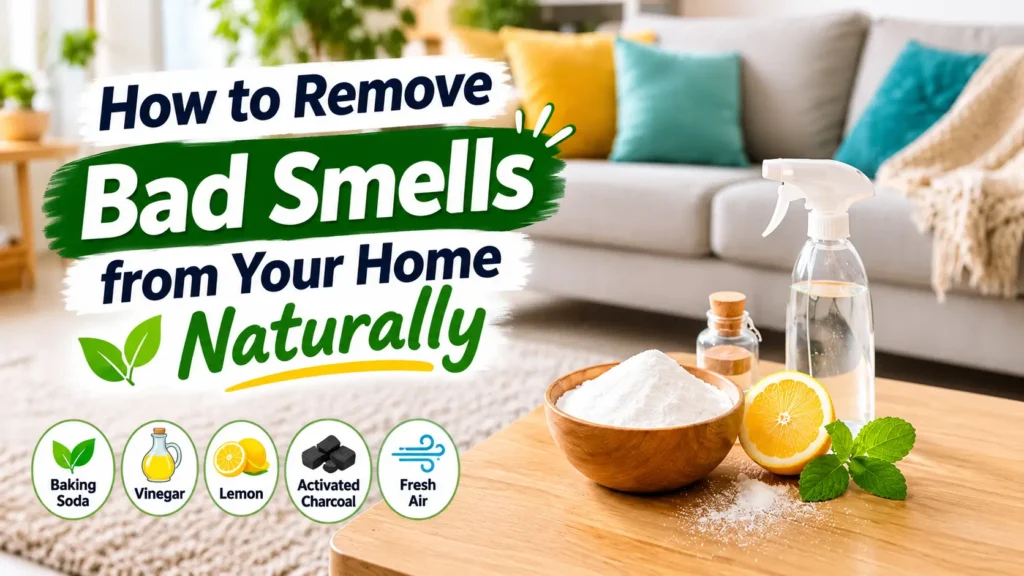
A fresh-smelling home feels cleaner, more comfortable, and welcoming. However, unpleasant household odors can develop even when you regularly clean your living space. Cooking, garbage, bathroom drains, pets, damp carpets, dirty laundry, and poor ventilation are common reasons why your home may develop unwanted smells.
Using an air freshener might temporarily cover an unpleasant smell, but it does not necessarily eliminate the source. For example, a musty smell could indicate excess moisture, while a persistent sewage smell may point to a plumbing problem.
The good news is that you can address many everyday household odors with simple, affordable cleaning methods and better home maintenance habits.
If you are wondering how to remove bad smells from your home naturally, this guide explains 15 practical methods using ingredients such as baking soda, vinegar, lemon, and activated charcoal, along with proper ventilation and regular cleaning.
You will also learn how to prevent unpleasant smells from returning and when a household odor requires professional attention.
Why Does Your Home Develop Bad Smells?
Before choosing an odor-removal method, try to identify where the smell originates. Different household odors can have different causes.
Here are ten common reasons:
- Poor ventilation: Stagnant indoor air allows cooking smells, moisture, and other odors to accumulate.
- Food waste: Leftover food, spoiled ingredients, and food scraps can produce unpleasant smells.
- Dirty kitchen drains: Grease, food particles, and organic debris can collect inside sink strainers and drains.
- Bathroom problems: Dirty toilets, dry plumbing traps, and drain buildup can create unpleasant bathroom odors.
- Pet accidents: Urine, pet bedding, litter boxes, and feeding areas can contribute to persistent smells.
- Damp fabrics: Wet carpets, curtains, towels, and upholstery can develop musty odors.
- Mold and mildew: Excess moisture can encourage mold growth on suitable surfaces and materials.
- Dirty appliances: Food residue inside refrigerators, washing machines, and dishwashers can produce unpleasant smells.
- Laundry problems: Leaving wet clothes inside a washing machine for too long can create stale odors.
- Smoke and cooking residue: Grease and smoke particles can settle on walls, furniture, curtains, and other surfaces.
Identifying the source is the first step toward effective natural odor removal.
How to Remove Bad Smells from Your Home Naturally – 15 Effective Methods
1. Use Baking Soda to Absorb Unpleasant Odors
Baking soda is a convenient household ingredient that can help reduce certain unpleasant odors.
It is particularly useful in suitable dry areas where unwanted smells remain after the original source has been cleaned.
How to use baking soda:
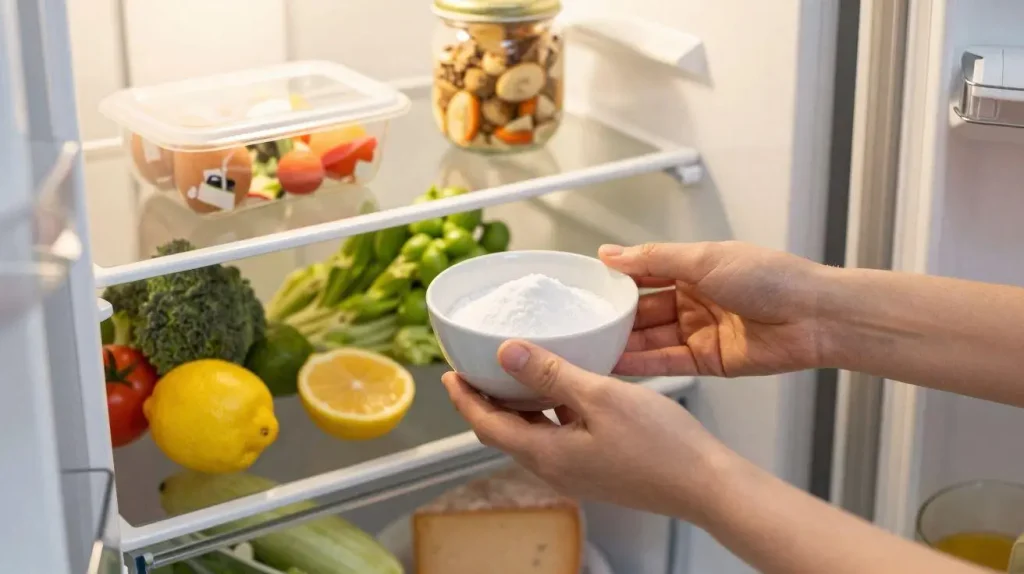
- Pour a small amount of baking soda into an open container.
- Place it inside a suitable refrigerator shelf or near an appropriate odor source.
- Keep the container away from children and pets.
- Replace the baking soda according to the condition of the product and odor.
You can also use baking soda on suitable carpets and rugs if their manufacturers permit it.
Sprinkle a light layer over the carpet, leave it for the period recommended for the material and product, and vacuum thoroughly.
Important: Baking soda is not suitable for every fabric, appliance, or surface. Always check manufacturer instructions and test an inconspicuous area first.
2. Improve Indoor Ventilation
Fresh airflow is one of the simplest ways to reduce ordinary indoor odors.
When indoor air becomes stagnant, cooking smells, moisture, and other airborne pollutants can remain inside your home.
Try these practical steps:
- Open windows when outdoor air quality and weather conditions permit.
- Use the kitchen exhaust fan while cooking.
- Run bathroom exhaust fans during and after showers.
- Keep ventilation openings unobstructed.
- Maintain air-conditioning and ventilation filters.
- Avoid allowing damp air to accumulate in cupboards and closed rooms.

Proper ventilation also helps control indoor moisture.
For additional guidance, learn how to improve indoor air quality and ventilation through practical steps recommended by the US Environmental Protection Agency (EPA).
The US Environmental Protection Agency recommends appropriate ventilation and moisture management as part of improving indoor air quality. US EPA+1
3. Remove Kitchen Odors Naturally
Cooking smells can linger long after a meal has been prepared.
Food spills, grease, leftover ingredients, and dirty utensils are common sources.
Follow these steps:
- Remove leftover food from cooking areas.
- Clean the stovetop after it has cooled.
- Wash greasy utensils and cookware.
- Wipe countertops using a suitable kitchen cleaner.
- Empty the garbage bin regularly.
- Clean food spills immediately.
- Use an exhaust fan while cooking.
Pay special attention to areas around the stove, microwave, refrigerator, and kitchen sink.
Regular cleaning helps prevent grease and food residue from producing lingering odors.
4. Clean Kitchen Drains and Sink Areas
Kitchen drains can develop unpleasant smells when food particles, grease, and other debris accumulate.
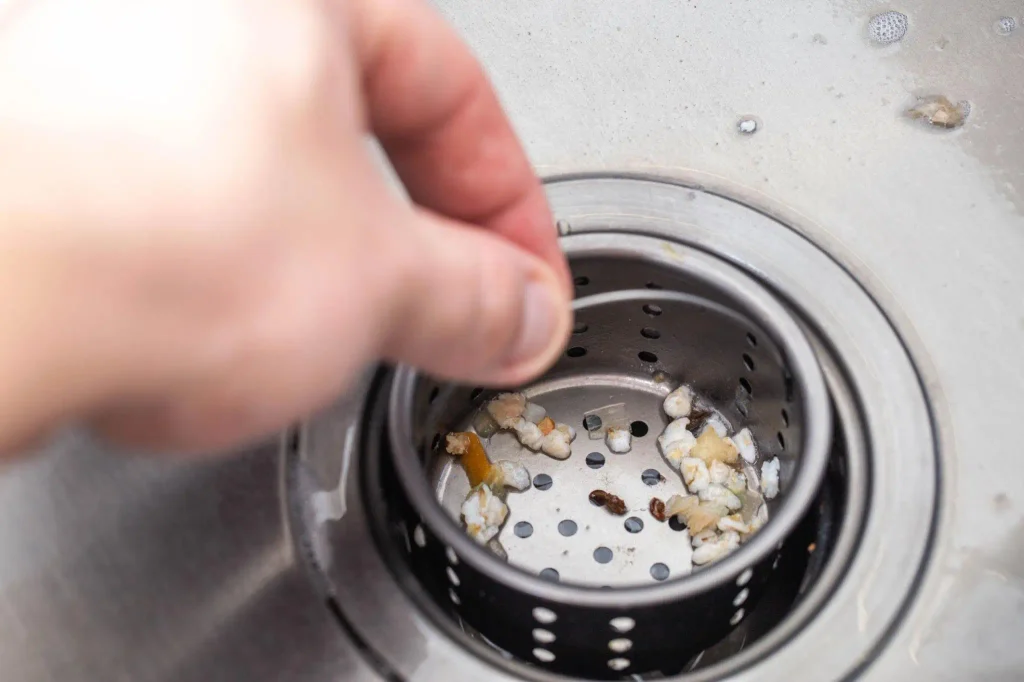
Try the following:
- Remove visible food debris from the sink.
- Take out the removable drain strainer.
- Wash the strainer using dish soap and water.
- Clean the sink basin and drain cover.
- Check whether water drains normally.
- Inspect the accessible area beneath the sink for leaks.
Avoid pouring cooking oil and grease into the drain.
If unpleasant odors continue or drainage becomes slow, contact a plumber to investigate a possible drainage problem.
Never combine chemical drain cleaners or mix household cleaning chemicals.
5. Use Lemon for Fresh-Smelling Kitchen Surfaces
Lemon has a fresh citrus scent and can help remove some food-related odors from suitable kitchen surfaces.
You can use it for appropriate cleaning tasks such as:
- Cleaning suitable cutting boards.
- Wiping compatible kitchen utensils.
- Removing certain food odors from suitable surfaces.
- Freshening appropriate washable kitchen items.
However, lemon juice is acidic and can damage marble, limestone, and other natural stone surfaces.
Do not use lemon as a guaranteed disinfectant or mold-removal solution.
Always check surface compatibility before cleaning.
6. Remove Bathroom Odors Naturally
Bathroom smells can come from dirty drains, toilet residue, damp towels, and poor ventilation.
Use these simple cleaning habits:
- Clean the toilet bowl regularly.
- Wipe the toilet seat, hinges, and surrounding floor.
- Remove visible hair from accessible drains.
- Clean the sink and shower surfaces.
- Wash damp bath mats and towels.
- Keep bathroom surfaces dry.
- Run the exhaust fan during and after showers.
- Inspect silicone sealant for deterioration and moisture problems.
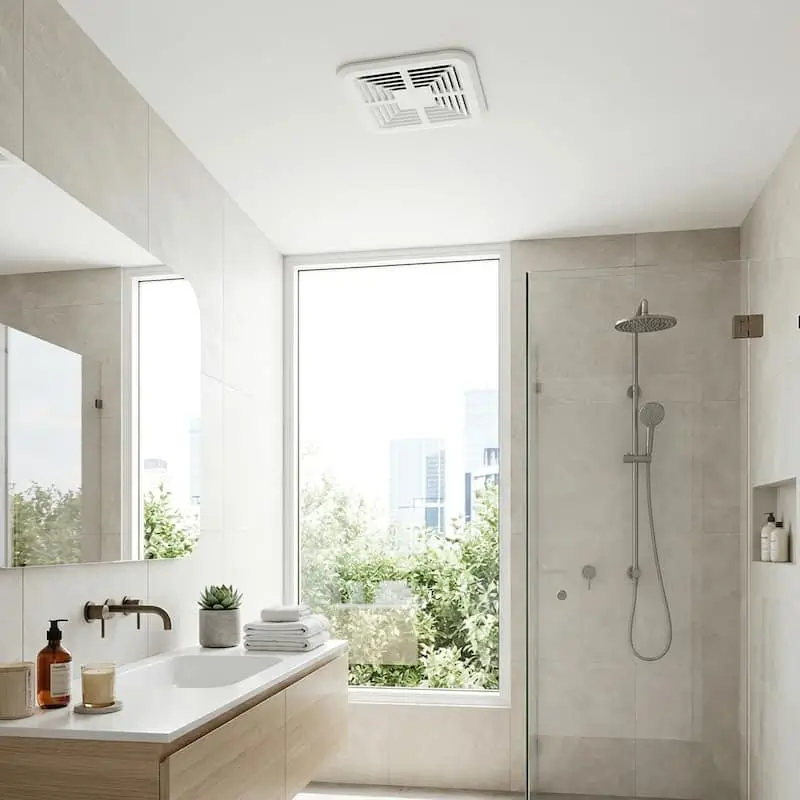
If you notice a persistent sewage-like smell, do not simply cover it with fragrance.
A dry P-trap, damaged toilet seal, or plumbing problem may be responsible.
See our detailed guide on how to get rid of bad smells in a bathroom.
7. Reduce Pet Odors from Your Home
Pets can bring comfort and happiness to a household, but their bedding, feeding areas, fur, and occasional accidents can contribute to unpleasant smells.
Try these methods:
- Wash pet bedding according to its care instructions.
- Clean food and water bowls regularly.
- Remove pet hair from suitable furniture.
- Clean accidents promptly.
- Wash washable fabric covers.
- Empty and clean litter boxes regularly.
- Keep pet feeding areas dry and clean.
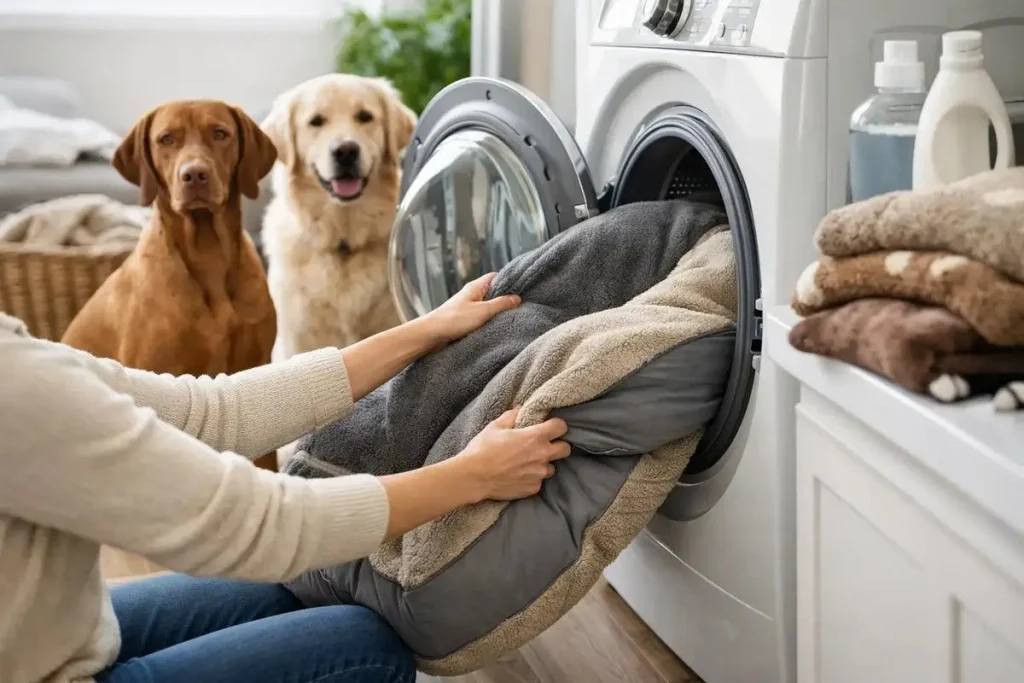
For urine accidents, use an appropriate pet-safe cleaning product designed for the affected material.
Avoid using products containing ingredients that may be harmful to your pets. Essential oils and strongly fragranced products are not automatically pet-safe.
8. Remove Musty Smells from Damp Areas
Musty odors often develop in areas affected by excess moisture.
Common locations include:
- Bathroom corners.
- Under kitchen sinks.
- Inside cupboards.
- Behind furniture.
- Around windows.
- Damp carpets and upholstery.
To address the problem:
- Identify the source of moisture.
- Check accessible plumbing connections.
- Dry suitable wet surfaces.
- Improve ventilation.
- Wash washable damp fabrics.
- Repair leaks.
- Arrange professional inspection if moisture or mold keeps returning.
Cleaning visible mold without fixing the moisture source may allow it to return.
According to the CDC guidance on preventing indoor mold, controlling moisture and fixing water problems are important steps in preventing recurring mold growth.
The CDC explains that mold prevention requires controlling moisture and correcting water problems. CDC+1
For additional guidance, read how to remove mold from bathroom walls safely.
9. Use Activated Charcoal for Certain Household Odors
Activated charcoal is a porous material that can adsorb certain odor-causing compounds.
Commercially prepared activated charcoal products are available for suitable household applications.
You can consider using them in:
- Appropriate cupboards.
- Shoe storage areas.
- Suitable enclosed spaces.
- Areas where a manufacturer recommends their use.
Follow the manufacturer’s instructions for placement, replacement, and regeneration.
Remember that activated charcoal does not remove every type of odor, fix moisture problems, or replace proper ventilation.
10. Clean Carpets, Rugs, and Upholstery
Carpets and upholstered furniture can trap dust, food particles, pet hair, and spilled liquids.
When these materials remain damp, unpleasant odors may develop.
Follow these steps:
- Remove loose dirt and debris.
- Address spills promptly.
- Use a cleaning method suitable for the fabric.
- Apply baking soda only if the manufacturer permits it.
- Vacuum thoroughly.
- Allow the material to dry completely.
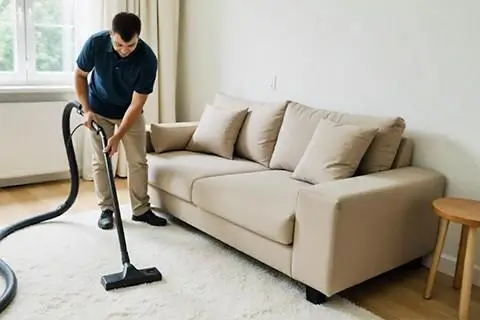
Avoid soaking carpets or upholstery unnecessarily.
If the odor remains after cleaning, professional upholstery or carpet cleaning may be necessary.
11. Remove Refrigerator and Freezer Odors
Refrigerator odors commonly come from spoiled food, spills, uncovered leftovers, and food residue around door seals.
To remove unpleasant smells:
- Remove expired or spoiled food.
- Check leftover food containers.
- Clean spills immediately.
- Wash removable shelves according to manufacturer instructions.
- Clean accessible door seals.
- Place baking soda in a suitable open container if permitted.
- Inspect accessible drainage areas if odors persist.
Store food in suitable covered containers.
If unusual smells continue despite proper cleaning, have the refrigerator inspected for a possible technical or drainage problem.
12. Prevent Laundry and Washing Machine Odors
Laundry can develop unpleasant smells when moisture and detergent residue remain inside the washing machine.
Try these habits:
- Remove wet clothes promptly.
- Dry laundry completely.
- Clean detergent dispensers regularly.
- Wipe accessible washing machine seals.
- Follow the manufacturer’s drum-cleaning instructions.
- Leave the door open when appropriate to allow the interior to dry.
Do not use cleaning chemicals or washing-machine additives that are not approved for your appliance.
13. Clean Garbage Bins and Prevent Waste Odors
Garbage bins can smell unpleasant even after the waste has been removed.
Food residue may remain on the bottom, sides, and lid.
To clean your bin:
- Empty the garbage.
- Remove visible food residue.
- Wash suitable surfaces with dish soap and water.
- Rinse if necessary.
- Dry the bin completely.
- Use properly fitted garbage bags.
- Clean the surrounding floor and storage area.
Empty waste regularly, particularly when it contains food scraps.
14. Remove Lingering Smoke and Cooking Odors
Smoke and cooking odors can settle on curtains, furniture, carpets, and other household materials.
To reduce these smells:
- Improve ventilation when safe.
- Clean suitable kitchen surfaces.
- Wash washable curtains and covers.
- Vacuum carpets and upholstery.
- Clean accessible grease deposits.
- Replace HVAC filters according to manufacturer instructions.
Persistent smoke odors, particularly after a fire, may require professional restoration and cleaning.
15. Create a Natural Home Odor Prevention Routine
The best way to maintain a fresh-smelling home is to prevent unpleasant odors before they become difficult to remove.
Develop a simple routine that includes:
- Removing food waste regularly.
- Cleaning kitchen surfaces.
- Washing dishes.
- Maintaining bathroom hygiene.
- Drying damp areas.
- Washing pet bedding.
- Cleaning garbage bins.
- Checking plumbing connections.
- Improving indoor ventilation.
- Inspecting areas prone to moisture.
Consistency is more effective than relying on occasional deep cleaning or strong fragrances.
Natural Ingredients and Products That Help Reduce Household Odors
Different ingredients work in different situations. The following comparison explains where each option may be useful.
| Ingredient | How it helps | Suitable application | Important limitation |
|---|---|---|---|
| Baking soda | Helps reduce certain odors | Suitable carpets, refrigerators | Not suitable for every material |
| White vinegar | Helps with some cleaning and residue removal | Compatible washable surfaces | Avoid natural stone; never mix with bleach |
| Lemon | Provides a fresh citrus scent and helps with some food residues | Compatible kitchen surfaces | Acidic; can damage stone |
| Activated charcoal | Adsorbs certain compounds | Suitable enclosed areas | Does not remove every odor |
| Fresh airflow | Moves stale indoor air outside | Rooms and kitchens | Depends on outdoor conditions |
| Dish soap and water | Removes grease and food residue | Suitable washable surfaces | Not suitable for every material |
Important safety rule: Never mix bleach with vinegar, ammonia, acids, or other cleaning products. Some combinations can release dangerous gases. Poison Control+1
Natural Odor Removal Methods vs. Commercial Air Fresheners
Natural odor removal and commercial air fresheners serve different purposes.
| Natural odor removal | Commercial air fresheners |
|---|---|
| Focuses on cleaning and removing odor sources | Often adds fragrance to cover unwanted smells |
| Can help address food residue and moisture-related problems | Usually does not fix underlying plumbing or moisture problems |
| May use ventilation and suitable household cleaning ingredients | May use sprays, gels, or fragrance diffusers |
| Can reduce the need for strong fragrances | Some fragrances may irritate sensitive individuals |
Natural methods are not automatically safer or more effective in every situation. Always choose products according to the problem, material, and manufacturer’s safety instructions.
Daily, Weekly, and Monthly Home Odor Prevention Schedule
A simple maintenance schedule makes it easier to keep unpleasant smells under control.
Daily Home Odor Prevention
- Remove kitchen food waste.
- Clean food spills.
- Wash dirty dishes.
- Wipe kitchen surfaces.
- Ventilate bathrooms after showers.
- Dry damp surfaces.
- Dispose of pet waste appropriately.
- Remove wet laundry from washing machines.
Weekly Home Odor Prevention
- Clean kitchen drains and sink strainers.
- Wash garbage bins when necessary.
- Clean toilets and bathroom surfaces.
- Vacuum carpets and rugs.
- Wash pet bedding when appropriate.
- Check refrigerator spills.
- Clean laundry areas.
Monthly Home Odor Prevention
- Inspect areas prone to moisture.
- Check accessible plumbing connections.
- Clean washing machine dispensers and seals.
- Inspect refrigerator door seals.
- Review ventilation performance.
- Check cupboards for dampness.
- Inspect garbage storage areas.
Adjust the frequency according to household usage and appliance instructions.
Common Mistakes to Avoid When Removing Bad Smells
Avoid these mistakes when trying to make your home smell fresh:
- Masking odors instead of finding the source: Air fresheners cannot repair leaks or remove spoiled food.
- Ignoring plumbing problems: Persistent drain and sewage odors need investigation.
- Leaving damp materials indoors: Wet fabrics may develop musty smells.
- Using excessive fragrances: Strong fragrances may irritate sensitive individuals.
- Using baking soda on unsuitable materials: Always check surface compatibility.
- Using vinegar on natural stone: Acidity can damage certain surfaces.
- Ignoring recurring mold: Moisture problems need to be corrected.
- Mixing household cleaning chemicals: Dangerous reactions can occur.
- Neglecting ventilation: Poor airflow allows odors and moisture to accumulate.
- Using unsuitable cleaners around pets: Check product safety and instructions.
Safety warning: Never mix bleach with vinegar, ammonia, acids, toilet cleaners, or other cleaning products. Use one product at a time according to its label.
When Should You Call a Professional?
Some unpleasant smells are warning signs of problems that ordinary household cleaning cannot solve.
Contact an appropriate professional if you notice:
- Persistent sewage-like smells.
- Repeated plumbing drain odors.
- Recurring musty smells.
- Visible or suspected hidden mold.
- Water damage or damp building materials.
- Persistent smoke odors.
- Unusual refrigerator or appliance smells.
- Ventilation system problems.
- Burning electrical smells.
A qualified plumber can investigate plumbing problems, while an electrician or appliance technician can inspect electrical and appliance faults.
Important gas safety warning
If you smell something resembling rotten eggs and suspect a natural gas leak:
- Leave the building immediately.
- Do not operate electrical switches or appliances.
- Do not light matches or create flames.
- Do not use a phone inside the affected area.
- Contact your local gas emergency service from a safe location.
- Do not return until the area has been declared safe.
If you live in India, refer to Maharashtra Natural Gas Limited’s gas-leak safety instructions for additional guidance on detecting and responding to suspected gas leaks.
For readers in India, consult your gas supplier’s emergency instructions. Maharashtra Natural Gas Limited provides gas-leak safety guidance. mngl.in+1
Frequently Asked Questions About Removing Bad Smells from Your Home
1. How can I remove bad smells from my home naturally?
Start by identifying the source of the odor. Clean affected surfaces, remove waste, wash damp fabrics, improve ventilation, and use suitable odor absorbers such as baking soda or activated charcoal.
2. What absorbs bad smells in a room?
Baking soda and activated charcoal can help reduce certain odors in suitable locations. Fresh airflow also helps remove stale indoor air.
3. Does baking soda remove unpleasant household odors?
Baking soda can help reduce some household odors, especially in suitable dry areas, refrigerators, and compatible carpets. However, it cannot fix plumbing problems, mold, or spoiled food.
4. How can I make my home smell fresh without air fresheners?
Keep your home clean, remove garbage regularly, wash fabrics, clean drains, dry damp areas, and ventilate rooms whenever outdoor conditions permit.
5. How do I remove cooking smells from my kitchen?
Clean cooking surfaces, wash greasy utensils, remove leftover food, empty garbage bins, and use a kitchen exhaust fan while cooking.
6. How can I get rid of musty smells in my house?
Find and correct the moisture source. Dry damp materials, improve ventilation, repair leaks, and investigate possible mold growth.
7. How do I remove pet odors naturally?
Wash pet bedding, clean feeding areas, remove pet hair, empty litter boxes, and clean accidents promptly using suitable pet-safe cleaning products.
8. Why does my house smell bad even after cleaning?
The odor may come from hidden moisture, plumbing problems, dirty drains, damp carpets, appliances, or poorly ventilated areas. Inspect the source rather than repeatedly using fragrances.
9. How do I remove unpleasant bathroom odors?
Clean the toilet, sink, shower, and accessible drains. Wash damp towels and mats, improve ventilation, and investigate persistent sewage-like smells.
10. Does vinegar help remove household odors?
White vinegar can help with certain cleaning tasks and residues on compatible surfaces. However, it is not suitable for every material, does not solve every odor problem, and must never be mixed with bleach.
11. How can I keep my home smelling fresh every day?
Follow a simple daily routine: clean food spills, remove garbage, wash dishes, ventilate rooms, dry damp surfaces, and keep pet areas clean.
12. When should I call a professional about persistent household odors?
Contact a professional when odors continue despite cleaning, particularly if you notice sewage smells, suspected gas leaks, recurring mold, plumbing problems, water damage, or burning electrical smells.
Conclusion
Keeping your home fresh and comfortable does not require expensive cleaning products or strong air fresheners.
The most effective approach is to identify the source of unpleasant odors and address the underlying problem. Regular cleaning, proper ventilation, moisture control, responsible waste disposal, and suitable natural odor absorbers can help reduce many common household smells.
If you want to learn how to remove bad smells from your home naturally, start with the simple methods in this guide and develop a consistent home cleaning routine.
Remember that persistent sewage odors, gas smells, hidden moisture, and recurring mold require appropriate professional attention.
For more practical cleaning, DIY, and home maintenance advice, explore other helpful guides on Fix The Annoying.