
A bathroom should be a clean and comfortable place, but unpleasant odours can sometimes develop even when the room looks spotless. A bad smell coming from the bathroom drain, toilet, shower, or sink can make the entire home feel uncomfortable.
Bathroom smells can have several causes, including dirty drains, dry P-traps, toilet seal problems, bacteria buildup, excess moisture, mold, and poor ventilation.
The good news is that many common bathroom odour problems can be identified and addressed with simple cleaning and maintenance steps. However, some smells may indicate a hidden plumbing problem that requires professional attention.
If you are wondering how to get rid of bad smells in a bathroom, this guide will help you identify the possible source, choose suitable cleaning methods, and prevent unpleasant odours from returning.
Let’s look at the most common causes and their practical solutions.
What Causes Bad Smells in a Bathroom?
Before trying to remove an unpleasant bathroom smell, it is important to understand what might be causing it. Different odours can point toward different problems.

Here are ten common causes.
1. Dirty or Clogged Bathroom Drains
Bathroom drains collect hair, soap residue, dirt, skin cells, and other organic materials. Over time, this buildup can produce unpleasant odours.
If the smell is strongest near the shower, bathtub, or sink drain, accumulated debris could be contributing to the problem.
2. Dry P-Traps and Plumbing Traps
A P-trap is a curved section of pipe installed beneath many bathroom sinks and other plumbing fixtures.
It holds a small amount of water that creates a seal between the bathroom and the drainage system. This water barrier helps prevent sewer gases from entering your home.
When a drain is not used for a long time, the water inside its trap may evaporate. Without enough water, unpleasant sewer odours can enter the bathroom.
3. Damaged Toilet Seal
A toilet is normally sealed to the drainage connection using a suitable sealing component, such as a wax ring in many North American installations.
If the seal becomes damaged or the toilet moves, sewer odours may escape around the toilet base.
A persistent sewage smell near the toilet should not be treated as an ordinary cleaning problem.
4. Sewer Gas Entering the Bathroom
Sewer gases can enter a bathroom through plumbing defects, dry traps, damaged seals, or drainage ventilation problems.
These odours may smell particularly unpleasant and sometimes resemble rotten eggs.
Persistent sewage-like smells require proper investigation rather than simply using an air freshener.
5. Bacteria and Organic Buildup
Soap residue, hair, toothpaste, and other organic materials can accumulate inside drains and around plumbing fixtures.
This buildup can contribute to unpleasant smells, especially when drains are not cleaned regularly.
6. Mold and Mildew
Bathrooms naturally experience moisture from showers, baths, and handwashing.
When damp surfaces do not dry properly, mold and mildew may develop around grout, silicone sealant, ceilings, walls, and other surfaces.
A musty smell can be a warning sign of excess moisture or possible mold growth.
7. Poor Bathroom Ventilation
Bathrooms without proper ventilation can trap humidity and unpleasant odours.
An ineffective exhaust fan may allow moisture to remain in the room, increasing the likelihood of damp smells and mildew.
8. Urine Buildup Around the Toilet
Small amounts of urine can collect around the toilet base, hinges, floor edges, and nearby grout.
If these areas are not cleaned properly, persistent urine odours may develop.
9. Dirty Bathroom Accessories
Wet bath mats, damp towels, shower curtains, bathroom bins, and cleaning cloths can contribute to unpleasant smells.
These items are sometimes overlooked during routine bathroom cleaning.
10. Hidden Plumbing Leaks
A leaking pipe behind a wall, beneath a sink, or around a bathroom fixture can create damp conditions.
Persistent moisture can damage building materials and encourage mold growth, producing a musty smell.
How to Identify Where the Bathroom Smell Is Coming From
Identifying the location of the odour can help you decide what to inspect first.
Use the following observations as troubleshooting clues, not as a definite diagnosis.
| Where you notice the smell | Possible cause |
|---|---|
| Shower drain | Organic buildup or trap problem |
| Bathroom sink | Dirty stopper, drain buildup or dry trap |
| Toilet base | Damaged seal or plumbing connection |
| Bathroom floor | Urine residue or damp flooring |
| Walls or ceiling | Moisture or hidden leakage |
| Whole bathroom | Poor ventilation or a plumbing issue |
| After flushing | Possible toilet seal or drainage problem |
Different household odours can have different causes, and the smell alone may not identify the exact problem. The New York State Department of Health’s guidance on odours and health provides additional information about household odours and their potential effects.
You can also consider when the smell appears.
- After taking a shower: Check the shower drain, wet bath mats, and ventilation.
- After flushing: Inspect for visible leakage and persistent odours around the toilet.
- After the bathroom has been unused: A dry plumbing trap may be responsible.
- When the exhaust fan runs: Consider whether the fan or ventilation system is affecting airflow or drawing odours from another area.
Remember that smell alone cannot reliably identify a plumbing fault.
How to Get Rid of Bad Smells in a Bathroom: 7 Step-by-Step Solutions
Once you have identified the likely source, try the appropriate cleaning or maintenance method.
Step 1. Clean Bathroom Drains
Dirty bathroom drains are a common source of unpleasant odours.
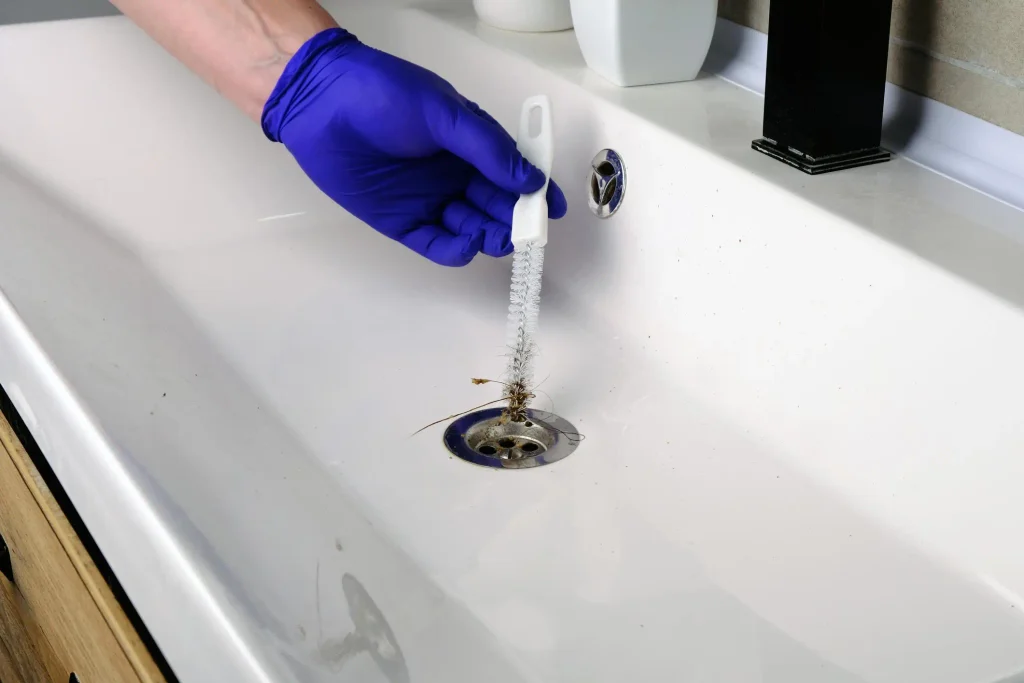
Hair, soap residue, and organic debris can collect around the drain opening and accessible components.
How to clean a bathroom drain:
- Remove the drain cover if it is designed to be removable.
- Put on suitable cleaning gloves.
- Remove visible hair and debris.
- Clean the drain cover with an appropriate bathroom cleaner.
- Use a suitable drain brush to clean accessible surfaces.
- Rinse according to the cleaning product instructions.
- Replace the drain cover properly.
Avoid pushing debris deep into the pipe.
If the drain remains blocked or produces persistent sewage-like smells, contact a plumber.
Important: Never mix different drain cleaners or combine chemical products. If you have already used a chemical drain cleaner, do not add another product to it.
If you are experiencing drainage problems in your home, read our guide on how to unclog a kitchen sink to learn about common drain blockages and practical solutions.
Step 2. Check for a Dry P-Trap
A dry P-trap can allow unpleasant sewer gases to enter your bathroom.
This problem is more likely in an infrequently used sink, shower, or other trapped drain.
How to restore the water seal:
- Identify the unused plumbing fixture.
- Slowly run clean water into the sink or appropriate drain.
- Allow enough water to refill the trap.
- Check whether the unpleasant smell improves.
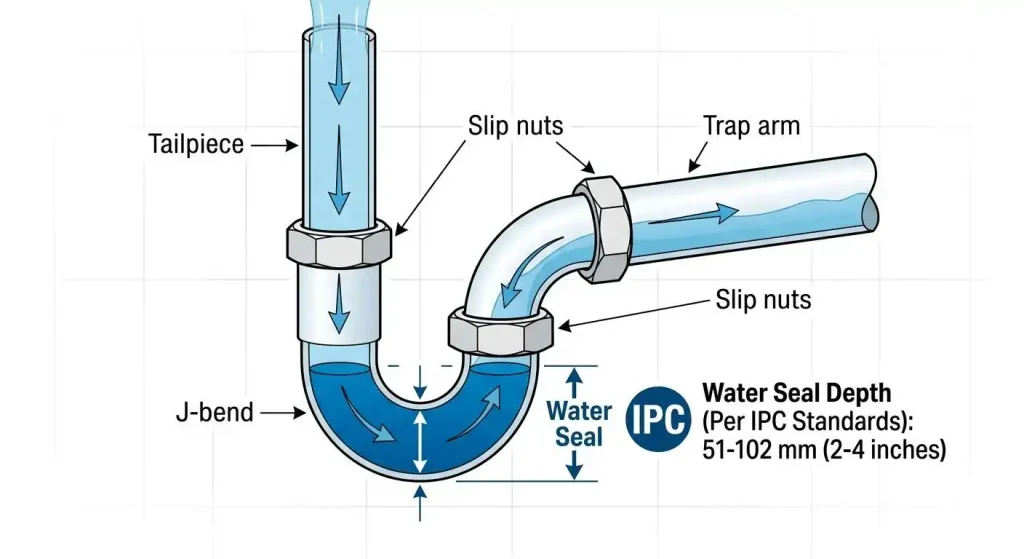
For an infrequently used fixture, periodically running water can help maintain the water seal.
If the smell returns quickly, the trap repeatedly loses its water, or several fixtures develop similar smells, ask a plumber to inspect the drainage and venting system.
Step 3. Clean the Toilet Properly
A toilet can develop unpleasant smells even when the bowl looks clean.
Urine residue, dirt, and bacteria can accumulate around areas that are easy to overlook.
How to clean the toilet:
- Apply a suitable toilet cleaner inside the bowl.
- Scrub underneath the rim and inside the bowl.
- Clean the toilet seat and hinges using a suitable product.
- Wipe the outside of the toilet.
- Clean around the toilet base and nearby floor.
- Wash reusable cleaning cloths after use.
- Follow the cleaning product’s instructions.

Pay special attention to the floor edges and the area behind the toilet.
If a sewage smell remains after cleaning, investigate the toilet seal rather than repeatedly cleaning the same surfaces.
If your toilet continues running after flushing, check out our guide on how to fix a running toilet for practical troubleshooting steps.
Step 4. Check the Toilet Seal and Plumbing Connections
A damaged toilet seal can allow unpleasant sewer odours to escape into the bathroom.
Look for these warning signs:
- A persistent sewage smell near the toilet base.
- A toilet that rocks or moves when used.
- Water appearing around the toilet.
- Damp or damaged flooring near the fixture.
- Odours that return shortly after cleaning.
A toilet that moves may also damage its seal further.
Do not assume that adding sealant around the outside of the toilet will solve the problem. The underlying connection needs to be inspected.
Contact a qualified plumber if you notice these warning signs.
Step 5. Remove Musty and Damp Bathroom Smells
A musty bathroom smell often indicates excess moisture, poor drying, or possible mold growth.
According to the Centers for Disease Control and Prevention (CDC), controlling moisture, repairing leaks, and maintaining proper ventilation are important steps in preventing mold growth indoors.
Try these steps:
- Remove damp towels and bath mats.
- Wash bathroom fabrics according to their care instructions.
- Clean suitable hard surfaces using an appropriate cleaner.
- Check grout and silicone sealant for visible mold.
- Inspect accessible areas around sinks and plumbing connections.
- Dry wet surfaces thoroughly.
- Investigate persistent dampness or suspected hidden leaks.
The CDC recommends controlling moisture, using bathroom exhaust fans that vent outdoors, and repairing leaks to help prevent mold growth. CDC+1
If mold keeps returning or appears to be growing behind walls or beneath flooring, arrange a proper assessment.
For additional bathroom cleaning advice, learn how to remove hard water stains from bathroom fixtures and surfaces.
Step 6. Improve Bathroom Ventilation
Poor ventilation allows moisture and unpleasant odours to remain inside the bathroom.

Proper bathroom ventilation and moisture removal are important for maintaining good indoor air quality. The US Environmental Protection Agency (EPA) recommends appropriate ventilation practices to help manage indoor air quality and moisture.
Improving airflow can help reduce humidity and prevent damp smells.
Practical ventilation tips:
- Run the bathroom exhaust fan when showering.
- Allow it to operate after showering according to the fan manufacturer’s guidance.
- Clean the accessible fan cover when safe and permitted by the manufacturer.
- Check that the fan is operating properly.
- Ensure the exhaust system discharges outdoors.
- Open a window when weather and outdoor air conditions allow.
- Avoid leaving wet towels and clothes inside the bathroom.
The EPA specifically recommends bathroom ventilation that removes moisture outdoors rather than releasing it into an attic or another enclosed space. US EPA+1
Remember, ventilation can help remove moisture and ordinary bathroom odours, but it cannot repair a damaged plumbing seal or stop sewer gases entering through a plumbing defect.
Step 7. Clean Bathroom Surfaces and Accessories
Everyday bathroom accessories can also contribute to unpleasant smells.
Pay attention to:
- Shower walls and floors.
- Sink surfaces and faucets.
- Bath mats and towels.
- Shower curtains.
- Bathroom bins.
- Toilet brushes and holders.
- Cleaning cloths.
- Frequently touched surfaces.
Wash reusable fabrics regularly and allow them to dry completely.
Empty bathroom bins before waste starts producing unpleasant odours.
Always choose cleaning products suitable for the surface being cleaned.
How to Get Rid of Different Types of Bathroom Smells
Different smells can have different causes. Here is how to approach some of the most common bathroom odours.
How to Get Rid of a Sewage Smell in the Bathroom
A sewage-like smell may indicate:
- A dry P-trap.
- A damaged toilet seal.
- Loose or damaged plumbing connections.
- A drainage blockage.
- A plumbing venting problem.
First, inspect accessible drains and look for visible signs of leakage.
If an unused trapped drain may have dried out, adding water may restore its water seal.
However, persistent sewage odours should be investigated by a plumber. Do not try to repair concealed sewer pipes or plumbing vents yourself.
How to Remove a Rotten Egg Smell in the Bathroom
A rotten egg or sulphur-like smell can have more than one possible source, including sewer gases and water-quality issues.
If you suspect a natural gas leak, follow the gas leak safety instructions provided by Maharashtra Natural Gas Limited (MNGL). Leave the building immediately and contact the appropriate emergency service from a safe location.
However, there is an important safety warning.
If a natural gas leak is possible, leave the building immediately. Do not operate electrical switches, use appliances, light flames, or use a phone inside the affected area. Contact your local gas emergency service from a safe location. Do not return until the area has been declared safe. PHMSA+1
Do not assume that a rotten egg smell is always coming from a bathroom drain.
How to Get Rid of a Musty Bathroom Smell
Musty smells are often associated with dampness and mold.
To address the problem:
- Wash damp towels and bath mats.
- Clean suitable hard surfaces.
- Dry wet areas properly.
- Improve ventilation.
- Inspect grout and sealant.
- Look for plumbing leaks.
- Investigate recurring moisture.
Cleaning visible mold without correcting the moisture source may allow the problem to return.
How to Remove Urine Smells from a Bathroom
Urine odours often remain around the toilet rather than inside the bowl.
Try the following:
- Clean the toilet base.
- Wipe the floor around the toilet.
- Clean suitable grout and floor edges.
- Wash bathroom mats.
- Clean accessible toilet hinges and surrounding surfaces.
- Use a suitable odour-removing cleaner according to its instructions.
For persistent odours, investigate concealed flooring or damaged materials.
How to Remove Bad Smells from a Bathroom Sink
A bathroom sink can smell unpleasant because of organic buildup, a dirty stopper, a dry trap, or a drainage problem.
To address the issue:
- Remove the sink stopper if it is designed to be removable.
- Clean accessible hair and debris.
- Wash the stopper.
- Clean the accessible drain opening.
- Run water to refill the P-trap.
- Check for visible leakage underneath the sink.
If the smell continues or drainage is slow, arrange a plumbing inspection.
Common Mistakes to Avoid When Removing Bathroom Odours
Some cleaning habits can make bathroom maintenance less effective or create safety risks.
Avoid these mistakes:
- Mixing cleaning chemicals: Never mix bleach with vinegar, ammonia, acids, or other cleaning products.
- Mixing drain cleaners: Combining different chemical drain products can create dangerous reactions.
- Using too much chemical cleaner: Follow the manufacturer’s directions.
- Masking sewage smells: Air fresheners do not fix plumbing problems.
- Ignoring dry P-traps: A missing water seal may allow sewer gases inside.
- Ignoring toilet seal problems: Cleaning cannot repair a damaged seal.
- Leaving wet towels in the bathroom: Damp fabrics can develop unpleasant smells.
- Ignoring hidden leaks: Persistent moisture needs investigation.
- Neglecting ventilation: Trapped humidity can contribute to musty odours.
- Ignoring recurring smells: Repeated unpleasant odours may indicate an unresolved problem.
The CDC advises against mixing cleaning products because certain combinations can release dangerous fumes. CDC+1
The most effective approach is to identify and correct the source rather than simply covering up the smell.
How to Prevent Bad Smells from Returning in Your Bathroom
Regular bathroom maintenance can help prevent many common odour problems.
Follow these practical habits:
- Clean accessible bathroom drains regularly.
- Remove visible hair and soap buildup.
- Keep infrequently used plumbing traps filled with water.
- Clean the toilet bowl and surrounding floor.
- Wash towels and bath mats.
- Empty bathroom bins regularly.
- Use the exhaust fan during showers.
- Keep bathroom surfaces dry.
- Repair plumbing leaks promptly.
- Inspect accessible plumbing connections.
- Check for visible mold and dampness.
- Maintain bathroom exhaust fans according to manufacturer instructions.

When Should You Call a Professional Plumber?
Not every bathroom odour can be fixed with ordinary cleaning.
Some problems involve concealed plumbing defects or drainage system failures.
Contact a qualified plumber if you notice:
- Persistent sewage smells.
- A toilet that rocks or moves.
- Water leaking around the toilet base.
- Repeatedly drying P-traps.
- Several drains producing unpleasant smells.
- Slow drainage across multiple fixtures.
- Suspected damaged sewer pipes.
- Plumbing venting problems.
- Persistent odours despite cleaning.
- Hidden leaks or recurring dampness.
If a strong rotten egg smell could indicate a natural gas leak, do not wait for a plumber. Leave immediately and contact the appropriate gas emergency service from a safe location.
Frequently Asked Questions About Bathroom Smells
1. Why does my bathroom smell bad even after cleaning?
Your bathroom may have a dry P-trap, a dirty drain, a damaged toilet seal, hidden moisture, or poor ventilation. Cleaning visible surfaces will not necessarily resolve these underlying problems.
2. How do I get rid of bad smells in a bathroom drain?
Remove visible hair and debris, clean the accessible drain cover and components, and use an appropriate cleaning method. If the smell persists, check for a dry trap or drainage problem.
3. Why does my bathroom smell like sewage?
Possible causes include a dry P-trap, damaged toilet seal, plumbing connection problem, or drainage venting issue. Persistent sewage smells should be professionally investigated.
4. What causes a rotten egg smell in a bathroom?
Possible causes include sewer gases, certain water-quality issues, or a natural gas leak. If a gas leak is possible, evacuate immediately and call the appropriate emergency service from a safe location.
5. Why does my bathroom smell musty?
A musty smell may indicate damp towels, excess humidity, mold, poor ventilation, or hidden water leakage.
6. Can a dry P-trap cause bathroom smells?
Yes. A P-trap holds water that helps prevent sewer gases from entering the bathroom. When the water evaporates, the protective seal can be lost.
7. How do I remove bad smells from a bathroom sink?
Clean the accessible sink stopper and drain opening, remove visible debris, and run water to refill the P-trap. Persistent odours may require plumbing inspection.
8. Why does my toilet smell bad even after flushing?
The smell may come from urine residue, dirty toilet surfaces, a damaged toilet seal, or another plumbing problem.
9. Can poor ventilation cause bathroom odours?
Yes. Poor ventilation allows moisture and ordinary bathroom odours to accumulate. A properly functioning exhaust fan can help remove humid air.
10. How do I get rid of urine smells in a bathroom?
Clean the toilet base, floor edges, grout, toilet hinges, and other affected surfaces using suitable cleaning products. Wash bathroom mats and fabrics regularly.
11. Why does my bathroom smell worse after using the shower?
Showering can release odours from drain buildup, increase humidity, and make existing damp smells more noticeable. Inspect the shower drain and ventilation system.
12. When should I call a plumber for bathroom smells?
Call a plumber when sewage odours persist, multiple drains smell unpleasant, the toilet leaks or moves, plumbing traps repeatedly dry out, or cleaning does not resolve the issue.
Conclusion
Unpleasant bathroom odours can come from several sources, including dirty drains, dry P-traps, damaged toilet seals, urine residue, excess moisture, and poor ventilation.
The best way to understand how to get rid of bad smells in a bathroom is to identify where the smell is coming from and address the underlying problem.
Regular drain cleaning, proper toilet maintenance, good ventilation, and moisture control can help prevent many common bathroom odours.
However, persistent sewage smells, suspected plumbing defects, and possible gas leaks should never be ignored.
Keep your bathroom clean, dry, and properly maintained to create a fresher and more comfortable home.
For more practical plumbing, bathroom cleaning, and home maintenance advice, explore the latest guides on Fix The Annoying.